
Overtourism, Regulation & Crime: Bali Villa Owners Facing New Challenges
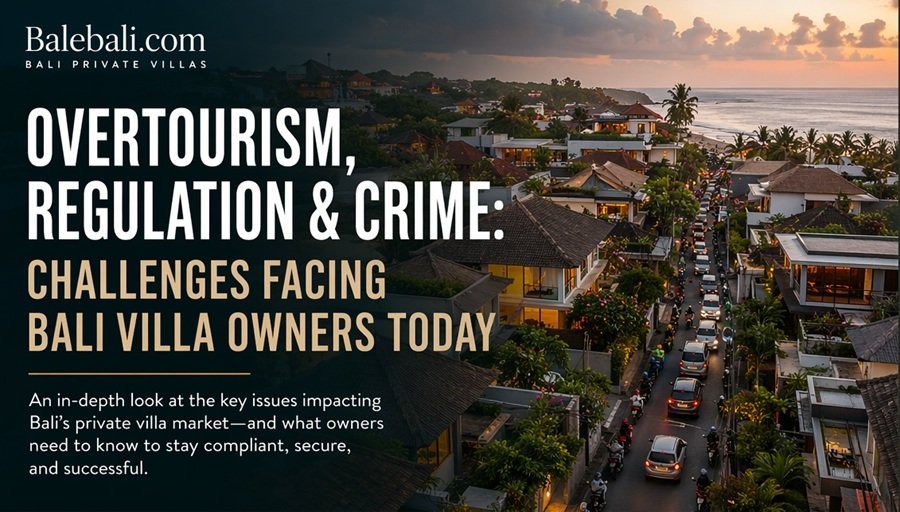
This article targets key Bali villa investment and tourism areas including Canggu, Uluwatu, Seminyak, Jimbaran, Balangan Beach, Ubud, Kuta, Legian, Denpasar, Nusa Dua, and Tabanan, Indonesia.
Bali’s private villa market has long been one of Southeast Asia’s most attractive hospitality segments, blending high-yield investment potential with the island’s global reputation as a tropical paradise. Areas such as Canggu, Uluwatu, and Seminyak have transformed rapidly over the past decade, evolving from quiet coastal zones into dense tourism hubs. However, as visitor numbers continue to surge, villa owners are now facing a new reality shaped by overtourism, tightening regulations, and rising concerns around crime.
Overtourism has become one of the most visible pressures affecting Bali’s villa ecosystem. Popular destinations like Kuta and Ubud have seen infrastructure pushed to its limits, with traffic congestion, waste management challenges, and environmental degradation impacting both residents and guests. For villa owners, this translates into a delicate balancing act. While high tourist demand can drive occupancy rates, overcrowding often diminishes the very sense of exclusivity and tranquility that private villas promise. Guests seeking serenity are increasingly shifting toward emerging areas, forcing established villa operators to rethink positioning and pricing strategies.
At the same time, regulatory changes are reshaping how villas operate across Bali. The Indonesian government, through institutions such as BKPM and local authorities in Badung Regency, has been strengthening enforcement around business licensing, including the requirement for a Nomor Induk Berusaha (NIB). Villas listed on online travel platforms are now under greater scrutiny, particularly those operating without proper permits or under residential zoning. This has created uncertainty for both local and foreign investors, especially in high-demand zones like Balangan Beach and Jimbaran, where rapid development has sometimes outpaced regulatory compliance.
The issue is further complicated for foreign investors, many of whom enter the market through leasehold arrangements. Questions around legal ownership, taxation, and long-term operational rights have become more prominent, particularly as authorities aim to formalize the sector. While these measures are intended to protect Bali’s long-term sustainability, they also require villa owners to adapt quickly, often navigating complex administrative processes and evolving policies.
Another growing concern is crime, which—although still relatively low compared to many global destinations—has seen a noticeable uptick in certain tourist-heavy areas. Reports of petty theft, scams, and occasional villa break-ins have raised alarms among property owners and guests alike. High-profile locations such as Legian and parts of Denpasar have experienced incidents that underscore the importance of security investments. For villa operators, this means going beyond aesthetic appeal to include surveillance systems, trained staff, and secure access points as standard features.
In addition to physical security, digital risks are also emerging. Fraudulent bookings, payment scams, and fake listings on third-party platforms are becoming more common, posing reputational and financial threats. Villa owners must now be proactive in verifying bookings, managing distribution channels carefully, and maintaining a strong online presence to build trust with potential guests.
Despite these challenges, Bali’s villa market remains resilient. Demand continues to grow, driven by evolving travel trends such as remote work, long-stay holidays, and wellness tourism. Destinations like Nusa Dua and quieter pockets of Tabanan are emerging as alternatives for those seeking less crowded environments, offering opportunities for forward-thinking investors to diversify.
The path forward for villa owners lies in adaptation. Embracing sustainable practices, ensuring full legal compliance, and prioritizing guest safety are no longer optional—they are essential for long-term success. Collaboration with local communities and authorities will also play a crucial role in maintaining Bali’s cultural and environmental integrity while supporting a thriving tourism economy.
Ultimately, Bali’s appeal endures because of its unique balance between natural beauty, cultural richness, and hospitality. For villa owners navigating today’s complex landscape, the key is not just to capitalize on demand, but to contribute to a more sustainable and secure future for the island.
What are the biggest challenges facing Bali villa owners today?
Bali villa owners are primarily facing overtourism, stricter government regulations such as NIB requirements, and increasing concerns about security and crime in tourist-heavy areas.
Do villa owners in Bali need a business license (NIB)?
Yes, most villa operations—especially those listed on online platforms—require a valid NIB and must comply with zoning and local regulations to operate legally.
Is crime a serious issue for Bali villas?
While Bali remains relatively safe, incidents such as theft and scams are increasing in busy tourist areas, making security measures essential for villa owners.
How is overtourism affecting Bali villas?
Overtourism is impacting infrastructure, guest experience, and environmental conditions, pushing villa owners to adapt by targeting less crowded locations and focusing on sustainability.
Bali Villas Articles
- Bali International Hospital Hub with Bali Villas in Sanur
- Bali Visa Guide 2025
- Romantic Bali Villa Getaways
- Wellness Villas in Bali: Health & Nature Inspired Vacation Homes
- Bali Airport Prepares for Hantavirus Concerns: What Tourists Need to Know in 2026
- Why Foreigners in Bali Are Selling Villas Cheaply Due to NIB and OTA Rules
- Best Places to Build a Villa in Bali
- ROI Realities: Investing in Bali Villas in 2026
- Why Bali Villa Occupancy Is Down: Oversupply, Pricing & Global Travel Costs
- Canggu Bali: Full of Tourists and Villa Developments Even in Low Season
- Seminyak Beach Bali — Still a Luxury Destination Amid Erosion Challenges
- Why Jimbaran Is Bali’s New Luxury Villa Hotspot in 2025 | Bali Villas Guide
- Bali Villa Registration Gap: The Hidden Crisis Behind Unlicensed Rentals
- Amed Villas Development | New Bali Tourism & Villa Investment Destination
- Overtourism, Regulation & Crime: Bali Villa Owners Facing New Challenges
- Bali Diving Adventure | Explore Bali’s Underwater World Near Luxury Villas
- Bali Trekking Around Bali Hidden Trails and Stay in Scenic Bali Villas
- New OTA Rules Indonesia: Property Listings Must Have NIB in 2026
- Kelingking Beach Nusa Penida Glass Lift Controversy