Ubud Villa Market 2026: Prices, Demand, Occupancy & New Developments
The villa market in Ubud has long been one of the most resilient segments of Bali’s hospitality and property industry. Known for its lush jungle landscapes, spiritual atmosphere, and wellness tourism, Ubud continues to attract both international travelers and property investors. In 2026, the market is entering a more balanced phase after several years of rapid growth following the post-pandemic tourism recovery.
Understanding how prices, demand, occupancy rates, and new developments interact is essential for anyone involved in hospitality, villa rentals, or real estate investment in this iconic part of Bali.
The Evolution of Ubud’s Villa Market
Over the last decade, Ubud transformed from a quiet cultural village into a globally recognized wellness destination. Travelers increasingly visit the area for yoga retreats, spiritual experiences, rice-field landscapes, and creative inspiration rather than nightlife or beach activities.
This shift in travel motivation has had a direct impact on the villa market. Instead of large resort complexes, many developers have focused on building boutique villas and private retreats that emphasize tranquility, sustainability, and privacy. The result is a property market that is very different from coastal hotspots such as Canggu or Seminyak.
The strength of Ubud’s tourism economy is closely tied to its identity as Bali’s cultural center. Visitors come to explore temples, art galleries, and traditional villages while enjoying accommodation surrounded by nature. This combination keeps villa demand relatively stable throughout the year compared with more seasonal coastal destinations.
From a geographic perspective, Ubud’s villa development extends beyond the town center into surrounding villages such as Sayan, Kedewatan, Penestanan, and Tegallalang, where hillside landscapes and rice terraces provide the scenic settings travelers seek.
Pricing Trends in 2026
Villa prices in Ubud vary widely depending on location, design, and amenities, but several general patterns have emerged in 2026. Average nightly rates for mid-range villas typically fall between about USD 100 and USD 180, while premium properties with multiple bedrooms and jungle views can command significantly higher prices.
The slight decline in average daily rates seen in 2026 reflects a normalization after the unusually strong pricing environment that followed the reopening of international travel in 2022 and 2023. During that earlier period, demand outpaced supply, allowing many villa operators to raise rates aggressively.
Today, the market is stabilizing. While prices have adjusted downward slightly, luxury villas still maintain premium positioning thanks to limited high-quality inventory in central Ubud and river-view areas.
For investors and operators, this normalization is not necessarily negative. A more balanced pricing environment often results in healthier long-term demand and better guest satisfaction.
Demand Drivers: Why Ubud Remains Attractive
Several travel trends continue to support strong villa demand in Ubud. One of the most significant is wellness tourism. Yoga retreats, meditation programs, and holistic health experiences have become defining features of the area. These activities attract visitors throughout the year rather than only during peak holiday seasons.
Another important driver is the rise of long-stay travelers. Digital nomads and remote workers often choose Ubud because it offers a quieter lifestyle than Bali’s coastal entertainment districts. Monthly villa rentals and extended stays are common, helping property owners maintain occupancy even during slower tourism periods.
Cultural tourism also remains a major factor. Visitors come to explore historic temples, traditional dance performances, and artisan workshops that reflect Balinese heritage. This type of travel experience is closely linked to the geographic identity of Ubud as Bali’s cultural heart.
From an AEO perspective, a common question travelers ask online is: Why do people choose villas in Ubud instead of hotels? The answer usually involves three factors: privacy, immersion in nature, and space. Villas offer larger living areas and direct views of jungle valleys or rice terraces, something hotels in denser tourism zones cannot easily provide.
Occupancy Performance
Occupancy rates in Ubud villas remain relatively strong compared with other parts of Bali. Many properties maintain average occupancy levels around 60 to 70 percent, supported by a mix of short-term tourists and longer-stay guests.
In the luxury segment, occupancy can reach approximately 67 percent annually, demonstrating steady demand even when the broader market fluctuates.
One of Ubud’s advantages is its consistent visitor flow. Unlike beach destinations that rely heavily on seasonal surfing or holiday periods, Ubud attracts travelers interested in culture, wellness, and nature year-round. Some property analysts note that occupancy in well-positioned villas can approach 75 to 80 percent during peak months, with slightly lower levels in quieter periods.
This stability is one reason investors often view Ubud as a relatively predictable hospitality market.
New Developments and Architectural Trends
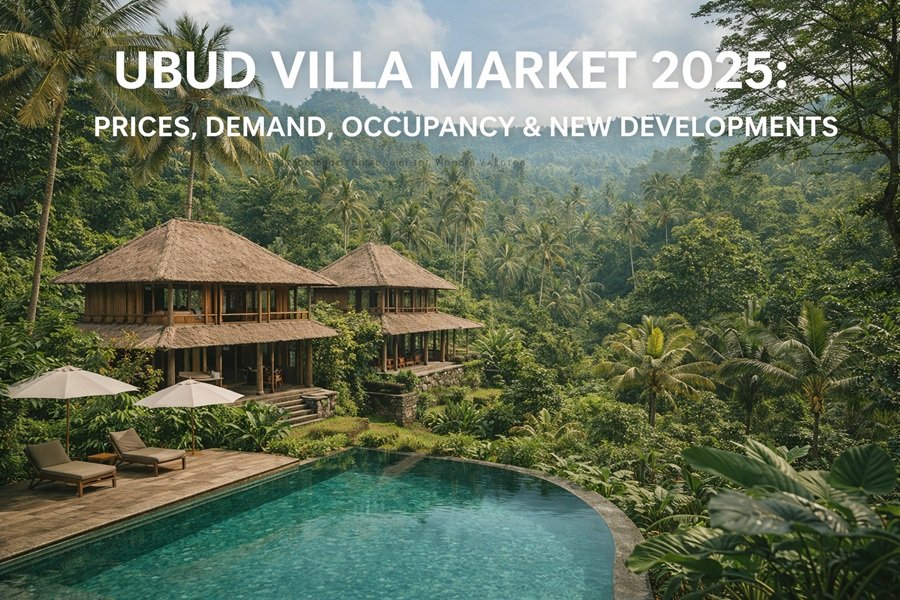
New villa projects in Ubud increasingly focus on sustainability and wellness design. Bamboo structures, natural stone, and open-air living spaces are becoming common features, reflecting both environmental awareness and guest preferences.
Developers are also integrating wellness facilities directly into villa properties. Private yoga shalas, meditation decks, and spa rooms are now standard features in many new developments. These additions allow villas to host retreat groups or wellness travelers without relying on external facilities.
Another noticeable trend is the emergence of boutique retreat complexes rather than standalone villas. These projects combine several private villas with shared amenities such as organic restaurants, spa pavilions, or co-working spaces.
Geographically, development is expanding into quieter villages surrounding Ubud, where land is still available and natural scenery remains intact. Areas like Tegallalang and Pejeng are attracting investors seeking panoramic rice-field views while maintaining proximity to central Ubud.
Market Challenges and Oversupply Concerns
Despite its strengths, the villa market in Bali—including Ubud—faces challenges. One issue is the rapid increase in the number of short-term rental properties across the island. Analysts estimate that tens of thousands of vacation rentals now compete for the same pool of travelers.
This expansion has created pricing pressure in some areas, forcing owners to adopt more competitive marketing strategies and professional management services. Properties that lack strong branding, good design, or effective online promotion may struggle to maintain high occupancy.
However, Ubud remains somewhat protected from oversupply compared with beach destinations. Its niche focus on culture and wellness continues to attract a specific audience that values quality experiences over nightlife or party tourism.
Outlook for 2026 and Beyond
Looking ahead, most market analysts expect the Ubud villa sector to remain stable rather than explosive. Occupancy levels may gradually increase toward the low-70 percent range as tourism infrastructure improves and international travel continues to grow.
Pricing is also likely to recover moderately as the market absorbs new supply and high-quality properties differentiate themselves through design and guest experiences.
For investors and hospitality operators, the key to success will be differentiation. Villas that emphasize sustainability, wellness experiences, and authentic Balinese culture are likely to perform best.
Conclusion
The Ubud villa market in 2026 reflects a maturing hospitality landscape. Prices have adjusted slightly after the rapid growth of the early post-pandemic years, but demand remains solid thanks to wellness tourism, cultural experiences, and long-stay travelers.
Occupancy rates remain healthy, particularly for well-managed properties in scenic locations around Ubud’s surrounding villages. At the same time, new developments are redefining what a Bali villa can be, blending eco-design, retreat spaces, and immersive nature experiences.
For travelers seeking tranquility and for investors looking for stable long-term returns, Ubud continues to stand out as one of Bali’s most reliable and distinctive property markets.